 Wellbeing
Fasting Blood Sugar vs Random Blood Sugar: What’s Normal and When to Worry
What is Fasting Blood Sugar?
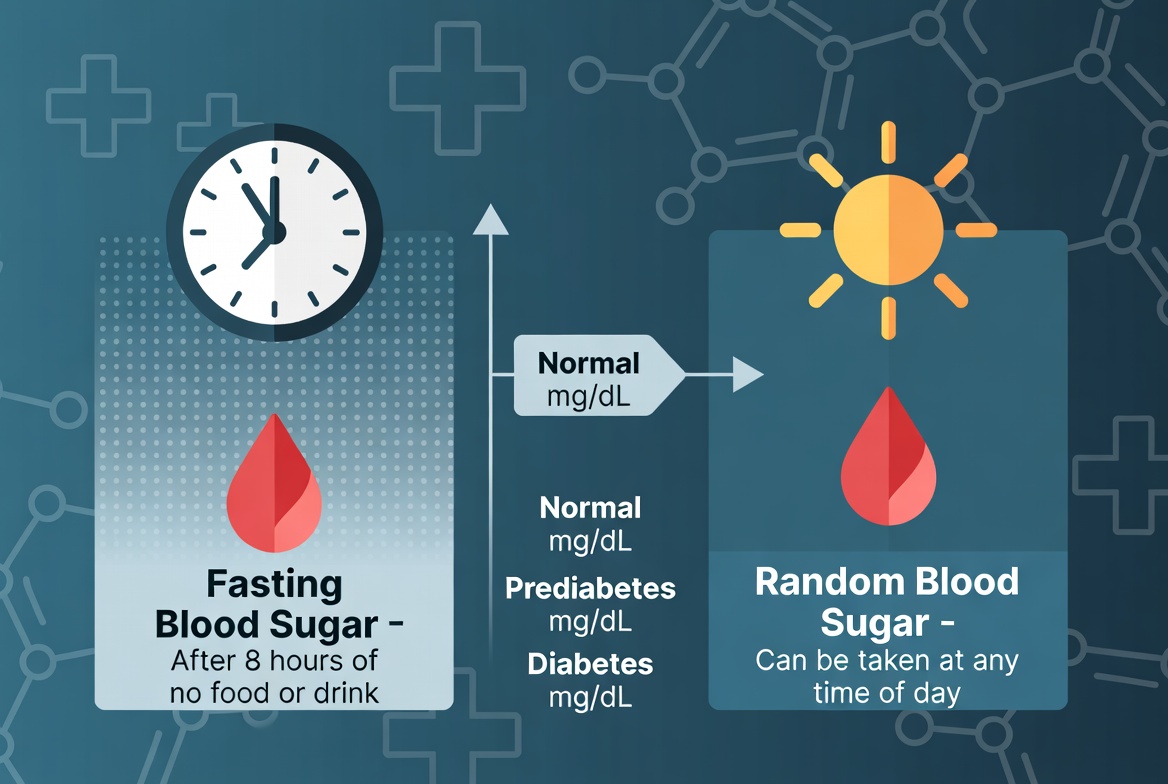
Fasting Blood Sugar (also called Fasting Plasma Glucose) measures your blood glucose after you have not eaten or drunk anything except water for at least 8 hours. It is usually done first thing in the morning.
What is Random Blood Sugar?
Random Blood Sugar (also called Casual Plasma Glucose) is taken at any time of the day, whether you have eaten or not. It reflects your blood sugar at that moment and is influenced by recent meals, stress, or illness.
Key point:
A random blood sugar of 200 mg/dL or higher, especially when combined with classic symptoms (excessive thirst, frequent urination, unexplained weight loss, or fatigue), is a strong indicator of diabetes and requires prompt medical attention.
Unlike fasting sugar, there is no official “prediabetes” range for a single random test. Doctors usually follow up a high random result with a fasting test or HbA1c for confirmation.
Fasting vs Random: Quick Comparison
FeatureFasting Blood SugarRandom Blood SugarWhen it is doneAfter 8+ hours without foodAny time of dayWhat it showsBaseline controlCurrent blood sugar levelBest forScreening & diagnosisQuick check when symptoms are presentDiabetes threshold≥ 126 mg/dL≥ 200 mg/dL + symptomsInfluenced by last mealNoYes
Why This Matters for Nigerians
Nigeria faces a growing diabetes challenge. According to the International Diabetes Federation, about 3 million adults (20–79 years) in Nigeria live with diabetes, and a very high proportion — around 78% — remain undiagnosed.
Many people only discover the problem after complications have started, partly because:
- Lab results are often written in medical language that is hard to understand
- People may ignore “slightly high” numbers
- Access to doctors for explanation is limited or expensive
- Lifestyle changes (urban diets, reduced physical activity, rising obesity) are increasing risk
Knowing the difference between fasting and random blood sugar helps you take action earlier — when lifestyle changes or medical care can still make a big difference.
When Should You Worry?
See a doctor promptly if:
- Your fasting blood sugar is 126 mg/dL or higher
- Your random blood sugar is 200 mg/dL or higher, especially with symptoms
- You have repeated results in the prediabetes range (100–125 mg/dL fasting)
- You experience excessive thirst, frequent urination, blurred vision, unexplained weight loss, or persistent fatigue
Even a single high result is worth discussing with a healthcare professional. Do not rely only on online information or home interpretation.
How HealthIntel Helps You Understand These Results
Getting a lab report is only the first step. Understanding it is the harder part — and this is exactly where HealthIntel comes in.
Here’s how the platform works systematically:
- Upload or enter your result You can upload the PDF from your lab or manually enter the values for Fasting Blood Sugar, Random Blood Sugar, or a full panel.
- Checked against verified reference ranges HealthIntel compares your numbers to standard medical reference ranges (adjusted for age and sex where relevant). It does not invent ranges on the spot.
- Plain-language explanation Instead of just showing “FBS: 118 mg/dL”, you receive a clear explanation of what the number means, whether it is normal, slightly elevated, or concerning, and what it can indicate.
- Guidance on next steps The app tells you when a result is worth discussing with a doctor and helps you track trends over time if you do repeated tests.
- Extra support tools You can also use the symptom checker, find nearby hospitals or labs, and compare HMO plans — all in one place.
HealthIntel is designed for everyday Nigerians who receive lab results and need clarity without medical jargon. It provides general health information only — it does not diagnose or replace a doctor.
Practical Tips While You Wait for Medical Advice
- Note whether your test was fasting or random — this changes the meaning completely.
- Keep a record of previous results so you can see trends.
- Avoid self-medication based on a single reading.
- If your result is high, book an appointment rather than waiting for symptoms to worsen.
Fasting and random blood sugar tests are simple, widely available, and powerful tools for detecting diabetes and prediabetes early. In a country where so many cases remain undiagnosed, understanding your numbers can be the first step toward better health.
If you have a recent lab report and are unsure what the figures mean, you can upload it on HealthIntel and get a clear, plain-language explanation within minutes. New users receive free credits to try the service.
Remember: HealthIntel explains your results — it does not replace professional medical advice. Always consult a qualified doctor about your health.
Want to understand your lab results?
Upload your lab report and get a clear explanation in seconds.
Get started free →